
Domestic abuse is an issue at the core of our Probation Service, given estimates suggest that at least 30% of people managed in the community have perpetrated domestic abuse against a current or former partner.
Emergency release measures and broader changes in the Sentencing Act 2026 have highlighted the urgency of the Probation Service getting their response to domestic abuse right. Domestic abuse perpetrators are fixated on their victim and will stop at nothing to control and harm them, even while under strict licence conditions which are intended to curb this behaviour.
It’s vital that our Probation Service has the information, capacity, and relationships with services in the community to keep victims of domestic abuse safe, hold perpetrators to account, and prevent further harm.
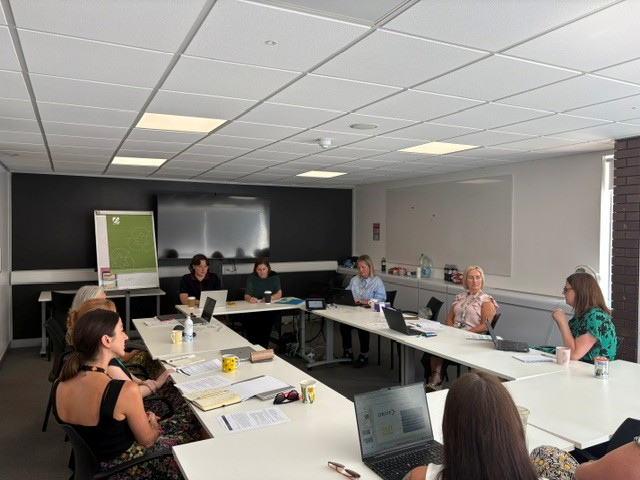
This summer, the Commissioner joined probation teams in Swansea as part of a visit launching her new priorities, which includes a focus on improving Probation’s understanding of domestic abuse and the actions it takes to prevent it.
During the visit, she met with senior leaders from Probation Wales, victim liaison teams and operations staff, and their partners in the community to understand how they were responding to the changes and pressures within the system to keep victims and survivors of domestic abuse safe.
One of the key takeaways from the visit was how important it is for all services to work together. The team in Swansea uses Multi-Agency Risk Assessment Conferences, also known as MARAC, to bring together policing, probation, health, education, housing, children’s services, specialist domestic abuse services, and other local partners to identify the most high-risk perpetrators who are serving short sentences, and get them into behaviour change programmes. These abusers wouldn’t ordinarily have access to these schemes, because the length of their sentences mean they can’t complete them while in prison, but Swansea’s approach enables partners to work together to identify who could benefit and ensure they’re able to access support.
A strong join-up between custody and community Probation teams – alongside close working relationships between intervention managers, Probation practitioners, and IDVAs – ensure that victim safety is prioritised, and that only those perpetrators suitable for such interventions can access them.
Domestic abuse services and public services across England and Wales are overstretched and under-resourced, so it’s easy to see attending these kinds of meetings – which there’s no legal requirement to hold in the first place – may not be prioritised. But in Swansea, the Probation team recognised the crucial role MARAC plays in preventing harm, so they maintain protected capacity for attendance. This ensures that everyone with information about a perpetrator’s risk can inform pre-release discussions about risk – including how to keep the victim safe.
One thing that helps Welsh Probation succeed in taking a whole-system approach to tackling domestic abuse is the violence against women and girls, domestic abuse, and sexual violence (VAWDASV) Strategy and Blueprint. This framework operates across the whole country and recognises that driving improvements in the criminal justice response to domestic abuse requires strong leadership, greater accountability and better partnership working. It sets out clear expectations for how agencies – like the Probation Service – should work together with their partners to address domestic abuse.
Approaches like this inform the Commissioner’s work in advocating for a more joined-up response to domestic abuse, recognising that a whole-society approach is the only way we can effectively tackle and end it for good.
But this is not without its challenges. Frontline staff directly supporting victims told the Commissioner that they worry about the sustainability of MARAC and wider multi-agency partnerships. With demand for support and high-risk management outstripping supply, practitioners explained how pressures across the system could undermine the partnership working and the integration of specialist support services that are crucial to keep victims safe.
Their concerns are not isolated – evidence shows that funding for specialist domestic abuse services across England and Wales is inconsistent, short-term, and falls far short of what is needed to support the survivors who need it. When everyone isn’t around the table at multi-agency partnerships – and when specialist support is not available to those who most need it – victims and survivors face the consequences.
The Commissioner’s visit to Swansea demonstrates the value of partnership working, particularly when perpetrators are transitioning out of custody and into the community. It also further emphasised the importance of sustainable funding and resourcing for all partners to play an active role.
Going forward into her third term, the Commissioner is determined to ensure that Probation’s active participation in local partnerships is the norm, not the exception. Insights like this from those on the frontline will shape the Commissioner’s work to ensure that all partners have the resource and capacity they need to engage.
Find out more about the Commissioner’s work to improve the criminal justice response to domestic abuse, including within the probation service.